



Deer of Sri Lanka – Graceful Spirits of the Wild
In the soft hush of dawn, as mist lingers between forest trees and grasslands begin to stir, a delicate head rises from the tall grass. Eyes alert, ears twitching, the deer senses your presence — not with fear, but with the quiet wisdom of prey that has survived for centuries. In Sri Lanka, deer are not just wildlife; they are symbols of serenity, survival, and timeless beauty.
Found across jungles, plains, and even misty highlands, Sri Lanka’s five native deer species offer both frequent sightings and moments of deep wilderness connection — ideal for first-time travellers and seasoned wildlife watchers alike.
🦌 Deer Species in Sri Lanka
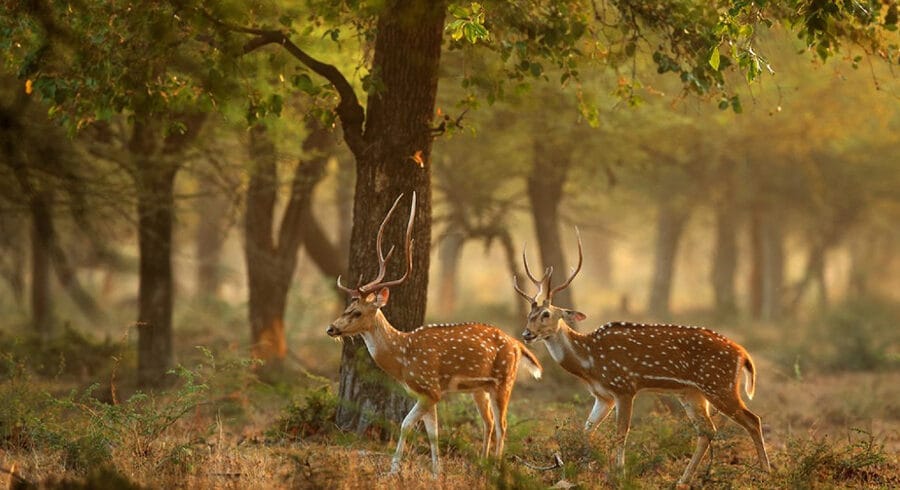
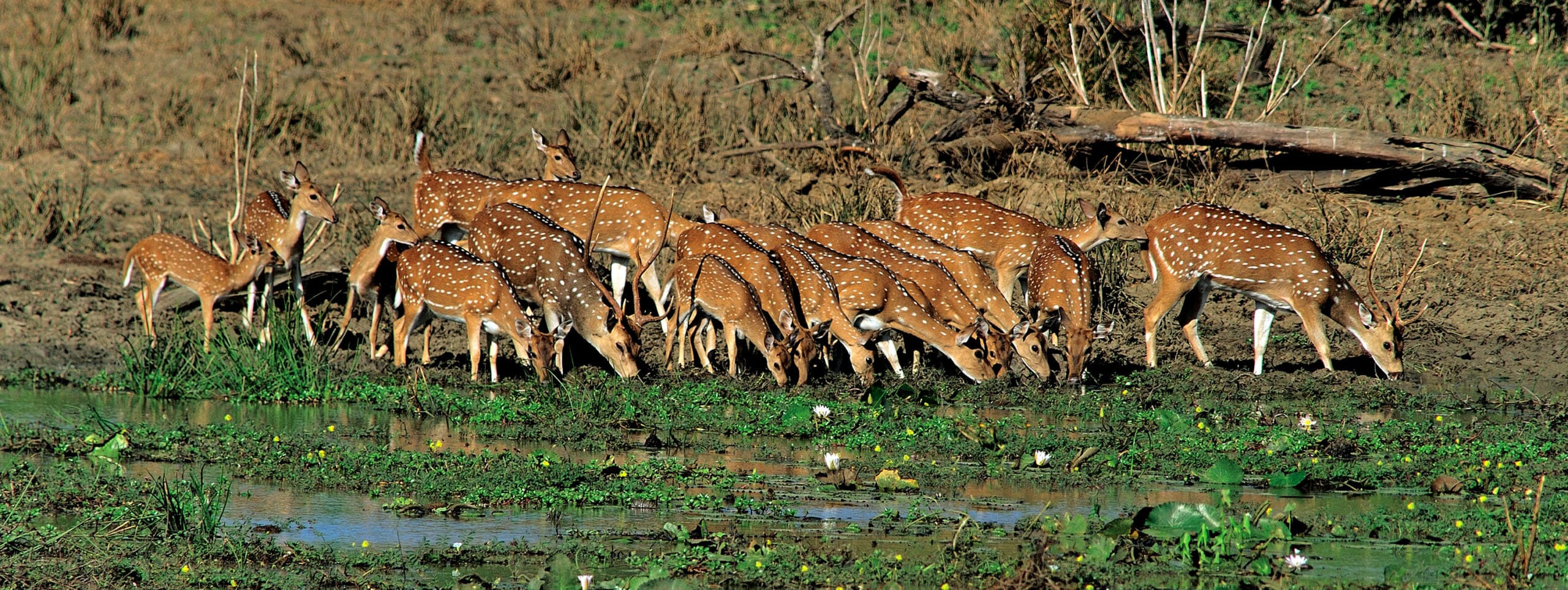
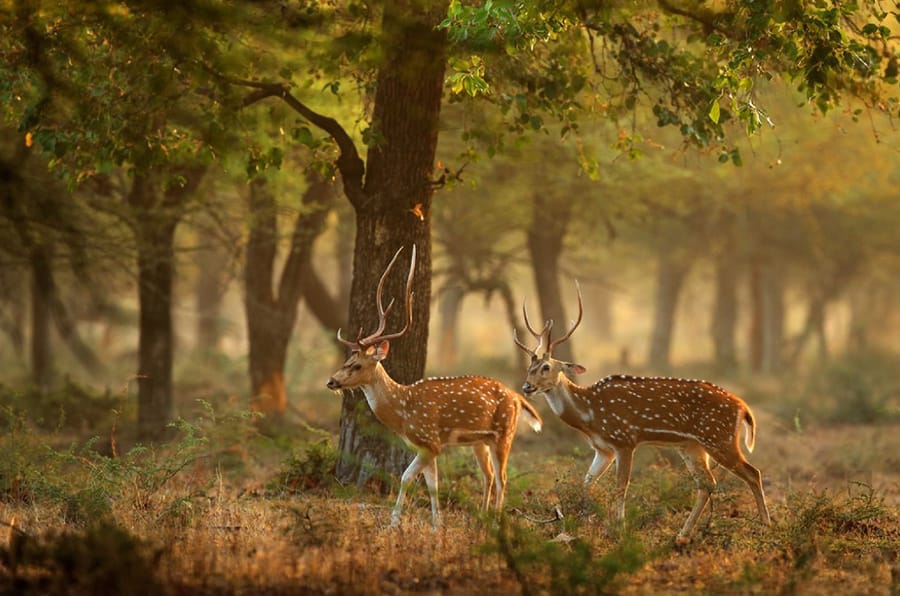
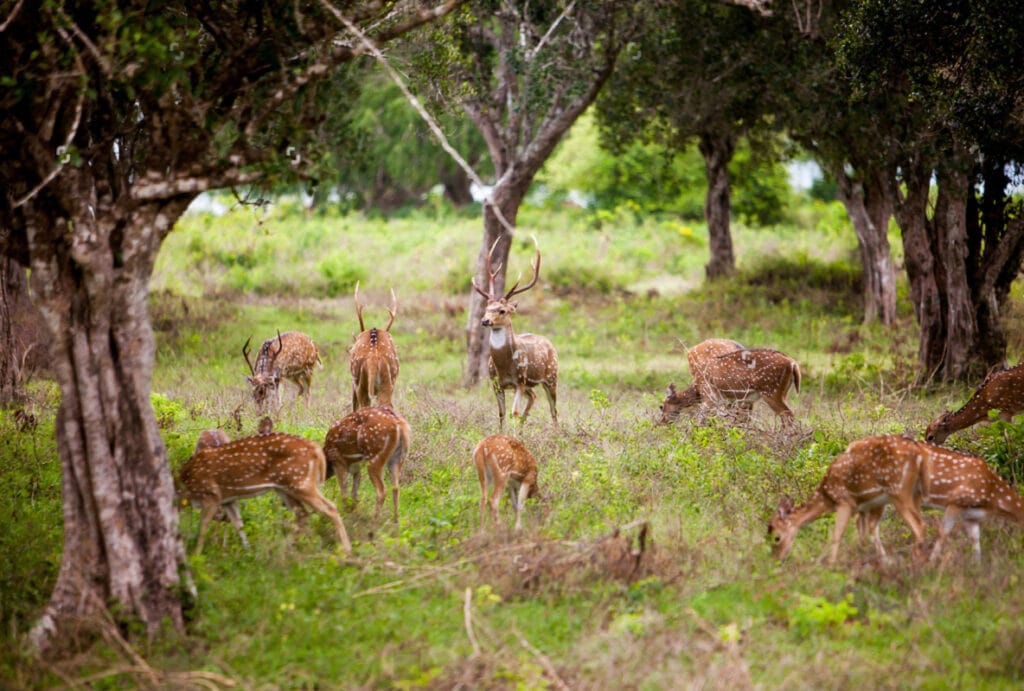
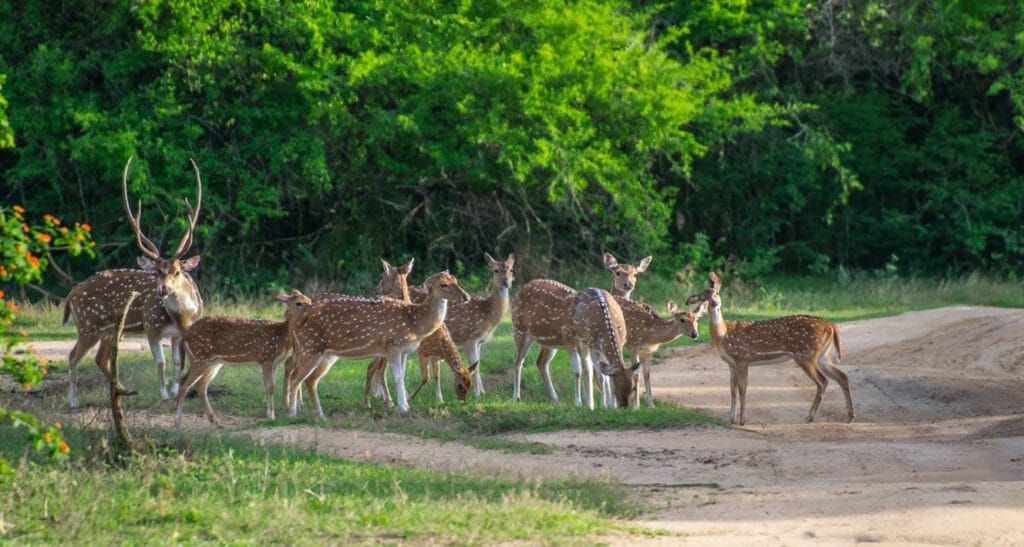
1. Spotted Deer / Chital (Axis axis)
- Most common and widespread deer in Sri Lanka
- Identified by their reddish-brown coat dotted with white spots
- Graceful herding species often seen in groups of 5 to 50, sometimes larger
- Often spotted near waterholes, grazing in open grasslands, or beneath shade trees
- Frequently seen in Yala, Wilpattu, Udawalawe, Kaudulla, and Minneriya
🐆 Fun Fact: Spotted deer often associate with langur monkeys and follow alarm calls — a brilliant natural warning system against predators like leopards.
2. Sambar Deer (Rusa unicolor)
- The largest deer species in Sri Lanka, weighing up to 270 kg
- Dark brown with shaggy coats, especially thick during cooler seasons
- Males have large, rugged antlers with three tines (points)
- More solitary than spotted deer, often seen alone or in small groups
- Found in Horton Plains, Knuckles, Wasgamuwa, and sometimes Sinharaja
- Common near Horton Plains’ World’s End Trail, where they roam fearlessly near visitors
🏞️ Highland Charm: In Horton Plains, it’s not uncommon to see sambar deer standing quietly in the early morning mist, creating hauntingly beautiful photo opportunities.
3. Barking Deer / Indian Muntjac (Muntiacus muntjak)
- Smallest and shyest of Sri Lanka’s deer
- Reddish-brown coat and dog-like bark used to alert danger
- Highly elusive; usually seen alone darting across jungle paths
- Active at dawn and dusk in Sinharaja, Knuckles, and forested areas of Wilpattu
- Look for them on quiet, lesser-trodden trails or during nature walks
4. Hog Deer (Axis porcinus)
- Extremely rare and critically endangered in Sri Lanka
- Slightly smaller than the spotted deer, with a low, rounded build
- Once found in the eastern dry zone (e.g., Gal Oya, Lahugala), now possibly extinct in the wild
- Current sightings are largely anecdotal and under scientific study
- Conservation efforts are underway to determine their status
5. Mouse Deer / Chevrotain (Moschiola meminna)
- Not a true deer, but a primitive ungulate known locally as “meeminna“
- Tiny and nocturnal, weighing only 2–3 kg
- Elusive and hard to spot, even for experienced guides
- Lives in dense forests like Sinharaja, Knuckles, and lowland rainforests
- Moves with jerky, rabbit-like hops; more often heard than seen
🔦 Tip: Best spotted during night walks or dusk safaris with a flashlight and a trained guide
🗺️ Best Parks to See Deer in Sri Lanka
| Location | Species Spotted | Best Time |
| Yala National Park | Spotted deer, sambar deer, occasional muntjac | Year-round (best: dry season) |
| Horton Plains | Sambar deer (very common), occasional barking deer | All year (best: Jan–Mar for misty mornings) |
| Wilpattu | Spotted deer, barking deer | May to September |
| Udawalawe | Spotted deer | Year-round |
| Knuckles Range | Sambar, barking, mouse deer | Year-round |
👀 Tips for Deer Watching on Safari
- Look near waterholes and meadows
- Especially in dry zones like Yala or Wilpattu
- Deer gather to drink and feed at dawn and dusk
- Stay quiet and still
- Deer have acute hearing and will flee at the first sign of movement or noise
- Use binoculars for shy species
- Especially barking deer and mouse deer — more often seen briefly before vanishing
- Travel early
- Morning safaris (6:00–9:00 AM) provide the best chances for clear sightings
- Observe herd dynamics
- Spotted deer communicate with tail flicks, foot stomping, and warning calls
- Watch how they interact with other animals like langurs and peacocks — a fascinating example of jungle cooperation
🦌 Deer in Sri Lankan Culture & Mythology
Deer hold symbolic value in Sri Lankan Buddhist and Hindu traditions:
- The deer park in Sarnath (India), where the Buddha gave his first sermon, is mirrored in temple carvings
- In folklore, deer are often seen as messengers of the forest, embodying purity, gentleness, and balance
- Ancient moonstone carvings in Anuradhapura include deer among sacred animals that represent the cycle of life
Their presence in forests adds not only beauty but also a deep spiritual resonance to Sri Lanka’s natural world.
🇳🇿 A Natural Connection – From Aotearoa to Lanka
For New Zealanders used to wild deer in Fiordland or red deer in alpine meadows, Sri Lanka’s deer offer a tropical, exotic twist — a window into ancient ecosystems where the deer share jungle paths with elephants, leopards, and crocodiles.
It’s not just about spotting a species. It’s about witnessing how deer survive, communicate, and live among predators and jungle symphonies — experiences that stay with you long after the journey ends.

Comments are closed