





The Graceful Peacock of Sri Lanka – A Royal Encounter in the Wild
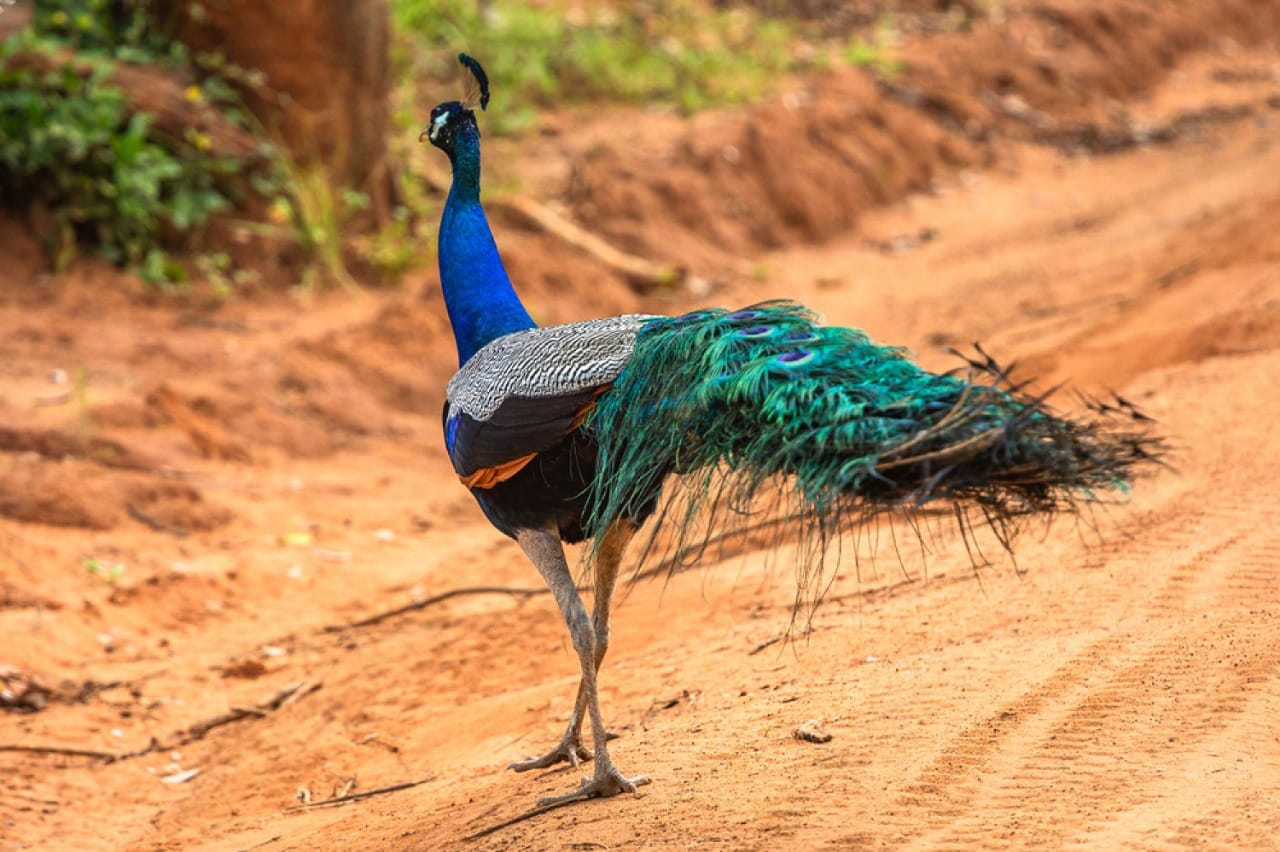
One of the most enchanting sights in Sri Lanka’s natural landscape is the Sri Lankan peafowl (Pavo cristatus), more commonly known as the Indian Peafowl or simply the peacock. Adorned with iridescent blues and greens and crowned with an elegant crest, the peacock is not just a bird, but a symbol of beauty, nobility, and mysticism in South Asian culture.
Widespread & Wild: Where Peacocks Roam
Peacocks are one of the most commonly sighted large birds in Sri Lanka, especially in the dry zone regions. Unlike in many countries where peacocks are only seen in zoos or ornamental gardens, in Sri Lanka, they roam freely and abundantly in the wild. Their density is especially high in:
- North Central Province – Around Anuradhapura, Mihintale, Ritigala, and Kalawewa
- Uva and Eastern provinces – Especially near Yala, Kumana, and Lahugala
- North Western Province – Wilpattu National Park and Puttalam region
- Dry forests, open scrublands, and agricultural edges are preferred habitats, especially near forest edges and abandoned fields.
In these areas, it’s not uncommon to see dozens of peacocks in a single day, particularly during early morning or late afternoon hours.
The Peacock Dance – A Wildlife Photographer’s Dream
Perhaps the most mesmerizing experience is witnessing the mating dance of the male peacock, typically observed during the breeding season from March to August. With its fan-like tail fully unfurled, the male struts, shivers its feathers, and emits distinctive calls to attract a mate. These displays are most often seen in open clearings at dawn and dusk, and they are a highlight for birdwatchers and photographers alike.
Best Places for Peacock Watching in Sri Lanka
Here are some top destinations for peacock spotting, ideal for nature lovers:
- Yala National Park – Apart from leopards, the open scrub jungles of Yala are teeming with peacocks.
- Wilpattu National Park – Known for its tranquil forest atmosphere, it is also a sanctuary for large numbers of peacocks.
- Minneriya and Kaudulla – While famous for elephants, peacocks are regularly seen near tank edges and grasslands.
- Mihintale & Ritigala – Ancient sites where peacocks roam freely among ruins and forest trails.
- Bundala National Park – A RAMSAR wetland site, great for combining peacock watching with wetland birding.
Ecological Role & Cultural Reverence
Peacocks are omnivorous and help control pests by feeding on insects, small snakes, and even crop pests. In rural Sri Lanka, they are considered both a natural pest controller and a sacred bird. In Buddhist and Hindu traditions, the peacock symbolizes wisdom, protection, and beauty.
In local folklore, hearing a peacock’s call—loud and echoing before rain—is considered a harbinger of good fortune.
Tips for Travelers & Birdwatchers from New Zealand
- Best time to visit for peacock watching: March to August (breeding season) and early mornings throughout the year.
- What to bring: Binoculars, silent cameras with zoom lenses, neutral-coloured clothing, and a patient eye.
- Travel responsibly: Avoid feeding wildlife or making loud noises. Stick to designated trails with a knowledgeable guide.
A Familiar Call in an Exotic Land
For New Zealand nature enthusiasts used to spotting native birds like the tūī or kererū in forested trails, watching wild peacocks in Sri Lanka is a spectacular contrast—an opportunity to connect with tropical biodiversity while immersed in ancient landscapes and vibrant rural life.


Comments are closed